Table of Contents
Before a compounded drug batch leaves a 503B outsourcing facility, it needs to be evaluated against the specifications established for that product.
That process is generally called batch release testing.
The goal is straightforward: confirm that the finished product has the identity, strength, quality, and purity it is supposed to have before it is approved for distribution.
For sterile products, that review may also include microbiological testing, such as sterility and bacterial endotoxin testing.
There is no single testing panel that applies to every product. The right set of tests depends on the formulation, dosage form, route of administration, product specifications, test methods, and any applicable regulatory or compendial requirements.
What is 503B batch release testing?
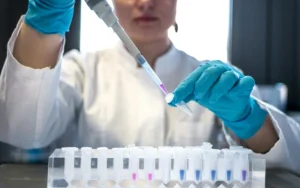
Batch release testing is the laboratory work used to determine whether a finished drug-product batch meets its established acceptance criteria.
Current good manufacturing practice requirements call for appropriate laboratory testing before a batch is released. That includes confirming that the finished product meets its final specifications and verifying the identity and strength of each active ingredient.
The laboratory results are important, but they are only one part of the release decision.
The facility’s quality unit must also review the batch records, laboratory data, deviations, investigations, and other required documentation before the batch can be approved for distribution.
In other words, a passing test result does not automatically release a batch. It provides documented evidence that the tested characteristics meet the established specifications.
Why batch release testing matters for 503B facilities
Section 503B of the Federal Food, Drug, and Cosmetic Act allows eligible facilities that compound sterile human drugs to register with the FDA as outsourcing facilities.
Although qualifying compounded drugs may receive certain statutory exemptions, 503B outsourcing facilities are still subject to current good manufacturing practice requirements.
A well-planned batch release program helps a facility:
- Confirm that the correct active ingredient is present
- Verify that the product meets its intended strength or concentration
- Identify contamination or other possible quality concerns
- Support the quality unit’s final release decision
- Document compliance with product specifications
- Reduce the risk of distributing an unacceptable batch
- Maintain complete and traceable quality records
If a finished batch does not meet its specifications or other applicable quality requirements, it should not be released unless the issue has been properly investigated and resolved through an appropriate, documented process.
Which tests may be included in a 503B batch release program?
The testing panel should be built around the product itself.
Depending on the formulation, dosage form, and intended use, a batch release program may include some of the following tests.
Identity testing
Identity testing helps confirm that the active ingredient in the finished product is the ingredient it is supposed to be.
Depending on the compound and the method, identity may be evaluated using chromatography, spectroscopy, or another appropriate analytical technique.
At its core, identity testing answers a simple but essential question:
Is the expected active ingredient actually present?
Potency or assay testing
Potency testing measures the amount or concentration of the active ingredient in the finished product.
This helps determine whether the product contains the intended strength and falls within the established acceptance range.
A result outside that range may indicate that the product contains too little or too much of the active ingredient.
The correct method and acceptance criteria depend on the formulation, concentration, product specifications, and the validated or verified procedure being used.
Sterility testing
Products intended to be sterile require appropriate laboratory testing to determine whether they meet established sterility requirements.
Sterility testing is designed to detect viable microorganisms in the samples tested.
However, finished-product sterility testing is not a replacement for proper aseptic processing, environmental controls, process validation, personnel qualification, or contamination-control procedures.
Sterility assurance depends on the entire manufacturing and quality system, not one finished-product test by itself.
Bacterial endotoxin testing
Bacterial endotoxins are pyrogenic substances associated with the outer membrane of certain bacteria.
If they are present above an acceptable level in a parenteral product, they may cause serious reactions in patients.
Bacterial endotoxin testing may be required when a product must meet an established endotoxin or pyrogen specification.
The applicable limit and testing method depend on several factors, including the product, route of administration, maximum dose, and relevant compendial or regulatory requirements.
Particulate matter testing
Injectable products may require testing for visible or subvisible particulate matter.
This testing helps identify unwanted particles that may have entered the product or formed during compounding, filling, packaging, storage, or handling.
The appropriate evaluation depends on the product type, container, formulation, fill volume, and applicable specifications.
pH testing
The pH of a finished preparation can affect its stability, solubility, compatibility, and suitability for administration.
If the result falls outside the established range, it may point to a problem involving the formulation, preparation process, raw materials, or product stability.
For products with an approved pH specification, testing helps confirm that the finished batch remains within the acceptable range.
Appearance and physical characteristics
Finished-product evaluation may also include a review of physical characteristics such as:
- Color
- Clarity
- Visible particles
- Fill volume
- Precipitation
- Phase separation
- Container or closure condition
- Other product-specific appearance requirements
These checks may seem basic, but they can reveal problems that occurred during preparation, filling, packaging, storage, or handling.
Other product-specific testing
Some products may require additional testing based on their formulation or dosage form.
Examples may include:
- Osmolality
- Specific gravity or density
- Moisture content
- Preservative content
- Deliverable volume
- Globule size
- Container-closure compatibility
- Dissolution or drug-release testing
- Chemical impurities
- Degradation products
Not every product needs every test.
The finished-product specification should clearly identify the tests, methods, sampling requirements, and acceptance criteria that apply to that particular product.
What determines the required testing panel?
A reliable batch release program begins with clearly defined specifications and suitable test methods.
The final testing panel may be influenced by:
- The active ingredient or ingredients
- Drug concentration
- Sterile or nonsterile status
- Route of administration
- Dosage form
- Known formulation risks
- Applicable USP chapters or monographs
- Validated or verified analytical methods
- Container-closure system
- Stability data
- Regulatory and quality requirements
- The facility’s internal procedures
The testing laboratory should understand the product, the method, the reporting requirements, and the acceptance criteria before testing begins.
That becomes especially important when a product needs a specific analytical method or when an existing method must be transferred, verified, or validated.
What happens when a result is out of specification?
An out-of-specification result should not be dismissed, ignored, or repeatedly tested until a passing number appears.
It requires a scientifically sound and properly documented investigation.
That investigation may include a review of:
- Sample preparation
- Instrument performance
- Calculations and data processing
- Reference standards
- Reagents and solutions
- Analyst technique
- Method suitability
- Laboratory records
- Compounding and manufacturing records
- Other potentially affected batches
The quality unit must review the investigation and determine the appropriate disposition of the batch.
If the batch does not meet its established specifications or other applicable quality criteria, it should not be released.
Why turnaround time matters
Batch release testing can affect production schedules, available inventory, and delivery commitments.
When test results are delayed, an otherwise completed batch may remain in quarantine.
At the same time, speed cannot come at the expense of method suitability, scientific review or data integrity.
A qualified third-party laboratory can help a 503B outsourcing facility manage testing capacity, specialized methods and time-sensitive testing needs.
The right laboratory partner should understand:
- The product and dosage form
- Applicable test methods
- Product specifications
- Acceptance criteria
- Documentation requirements
- Sample and reference-standard needs
- How testing timelines affect the final release decision
Plan testing before samples arrive
The best time to establish a batch release testing plan is before the finished samples arrive at the laboratory.
Early coordination gives the outsourcing facility and laboratory time to confirm:
- The required testing panel
- Test methods
- Sample quantities
- Reference standards
- Product specifications
- Acceptance criteria
- Documentation requirements
- Expected turnaround time
- Shipping and handling instructions
Planning in advance can prevent avoidable delays and help make sure the laboratory is prepared to begin testing when the batch is submitted.
503B batch release testing support from Prompt Praxis Laboratories
Prompt Praxis Laboratories provides analytical and microbiological testing support for pharmaceutical products and compounded preparations.
Depending on the product and its specifications, PPL capabilities may include:
- Potency or assay testing
- Identity testing
- Sterility testing
- Bacterial endotoxin testing
- Particulate matter determinations
- pH and other physical testing
- Method development and validation
- Method verification or transfer
- Stability and compatibility studies
- Investigation and confirmation testing
Because every product is different, testing requirements should be reviewed before samples are submitted.
Regulatory references
The following official resources provide additional information about outsourcing facilities and finished-product testing requirements:
- FDA: Information for Outsourcing Facilities
- 21 CFR 211.165: Testing and Release for Distribution
- 21 CFR 211.167: Special Testing Requirements
- USP General Chapter <71>: Sterility Tests
- USP General Chapter <85>: Bacterial Endotoxins Test
- USP General Chapter <788>: Particulate Matter in Injections
- USP General Chapter <790>: Visible Particulates in Injections
This article is intended for general educational purposes. Testing requirements should be evaluated for each product based on its formulation, dosage form, specifications, methods, and applicable regulatory and compendial requirements.
Need Support With Pharmaceutical Laboratory Testing?
Frequently Asked Questions About Laboratory Testing Services
What is batch release testing?
Batch release testing is the laboratory evaluation used to determine whether a finished drug-product batch meets its established specifications before distribution.
What tests are required for a 503B compounded drug batch?
The required tests depend on the product, formulation, dosage form, route of administration and approved specifications. Testing may include identity, potency, sterility, bacterial endotoxins, particulate matter, pH and other product-specific evaluations.
Does every 503B batch require sterility testing?
Products intended to be sterile require appropriate testing for sterility. The complete testing program depends on the product and its applicable specifications and requirements.
Is bacterial endotoxin testing the same as sterility testing?
No. Sterility testing looks for viable microorganisms in the samples tested. Bacterial endotoxin testing evaluates pyrogenic substances associated with certain bacteria. A product may need to meet both sterility and endotoxin requirements.
Who makes the final decision to release a batch?
The facility’s quality unit makes the final batch disposition decision after reviewing laboratory results, batch records, investigations, deviations and other required documentation.